Ortho & Physio in Dialogue · Issue 5
“We should not do the work for the patient”
Nikola Troch leads Somana’s physiotherapy team at Gendarmenmarkt. She has built a practice from scratch, analysed studies in a sports medicine clinic and sold digital therapy to doctors. A conversation about what physiotherapy can do today, where its limits lie, and why a suitcase plays a surprisingly important role.
Interview by Jesaja Brinkmann
•
10 min
•
September 2026
Nikola Troch
Physiotherapist and team lead, Somana Berlin
It had been a quiet day, Nikola Troch says at the start — not quite so hectic. She has half an hour, then she needs to head back down to her patients. Troch qualified in Münster in 2017, analysed studies at a sports medicine clinic in Leipzig, visited doctors for a digital health company and built a Leipzig practice from its very beginning. Since March 2026, she has led the physiotherapy team in Berlin.
01
Doing everything yourself
Somana
In Leipzig, you built a practice from scratch, growing it to four therapists in a year. You were the clinical lead, but did not own it. What would you have done differently if it had been yours?
Troch
I would have made fewer impulsive decisions and relied more on numbers and data. And I would have established standards earlier, so that tasks and responsibility were shared across the team. When you are there from the start and build something, you tend to want to do everything yourself. You then struggle to delegate. Yet it pays to find ways early on for processes to keep running independently and to a high standard.
02
A child does not learn to ride a bike overnight
Somana
An injection takes a few minutes. Your work takes weeks and requires participation. How do you sell that?
Troch
An injection initially sounds like a quick, direct solution, and it can help for a short while. But the effect does not last that long. With treatment and training over a longer period, we achieve a much better long-term effect, better results and therefore a better quality of life. I like using this image: a child does not learn to ride a bike overnight either. It takes time and work. But in the end it is worth it.
“A child does not learn to ride a bike overnight either.”
Somana
How do patients respond?
Troch
Many first need a little encouragement to leave their comfort zone, because it takes effort and work, and sometimes a tolerance for frustration too. But when they see how quickly their symptoms are already improving, see it with their own eyes and feel how much more resilient they become over time, they soon realise it is worthwhile.
03
What never came up
Somana
Do you see patients where you are certain that conservative treatment would have been enough?
Troch
Yes, definitely. In many cases, conservative treatment was never discussed or was not fully exhausted before those decisions were made. Looking back, some could have tried that route first. Especially as many people are not fully aware of the risks of surgery, or of the recovery afterwards. Patients often feel even worse after an operation or an injection than before. You always have to weigh that up carefully and consider many individual factors.
Somana
What complications do you see?
Troch
Bacteria can settle in during wound healing, and inflammation can occur. Even with standard operations such as arthroscopy, the desired treatment outcome may not be achieved and another procedure may be necessary.
04
The suitcase
Somana
In the statutory health insurance system, you have around twenty minutes per treatment. Is that enough for you?
Troch
It always depends a little on the individual case and the type of therapy. But we should not do the work for the patient. We can only give them the tools to develop self-efficacy early on. We like using the image of a suitcase containing those tools. The patient then always knows what they can draw on to help themselves. Physiotherapy becomes a regular check-in where things can be updated and refined. The main work lies with the patient, and that way you can achieve a good result even with short appointments.
05
The long-term patient
Somana
Since 2024, open prescriptions have allowed you to decide the type, duration and frequency of treatment yourself, while the doctor makes the diagnosis. How have you used that freedom?
Troch
My experience has been very positive, because you can respond much more individually to the patient’s needs and decide together what is necessary. You have that flexibility without rigid guidelines you have to follow. The shoulder in particular is incredibly complex; you generally cannot get through it with a prescription for six sessions.
Somana
And the downside?
Troch
It is a shame that financial viability in practices sometimes clashes with good therapy. A long-term patient who comes back every week all year initially appears more profitable. But that is not the same as achieving the goals of physiotherapy. It is always a shame when approaches like this cannot take hold because they are exploited too much financially rather than used for the patient’s benefit.
“A long-term patient initially appears more profitable.”
06
Where the boundary lies
Somana
Germany does not allow direct access without a doctor, unlike many other countries. Medical associations cite patient safety. How many patients have you deliberately not treated and referred back?
Troch
Several, definitely.
Somana
What does that require?
Troch
It is important to establish standards like these in physiotherapy. Red flags must be clearly understood, and there must be a clear boundary around what requires medical diagnosis. You need to be attentive, take a certain responsibility, keep these things in mind and refer patients onwards for further investigation.
07
Without a control group
Somana
In Leipzig, you analysed studies in a sports medicine clinic — before and after, without a control group. How much of the effect was simply time?
Troch
That is naturally difficult when you have no control group and cannot compare directly. So much depends on so many factors: treatment, recovery, flare-ups too. All these factors can influence a post-treatment assessment. We need more research into exactly what underlies them. What matters is working with sound methods, and in field studies without a control group you cannot always capture that completely.
Somana
Your further training includes osteopathic elements. The evidence is limited. How do you reconcile that?
Troch
The evidence for osteopathy is very limited — we have to say that clearly. But I think it is important to distinguish: evidence-based practice includes clinical experience, the individual needs of patients and the evidence from studies. Those belong together; by definition, that is what evidence-based practice means.
Somana
And hands-on treatment?
Troch
It is important first to build trust, establish a therapeutic relationship, explain a great deal and offer human connection. Passive methods can play a part in that. But purely passive approaches should not become an end in themselves. They can be one element, but you should always keep the goal clearly in mind: in what direction does the patient want to improve?
Somana
And if someone says their pelvis is crooked and asks you to put their back into place?
Troch
That message is still repeated widely in society. It often starts at the doctor’s, where language like that is used, and you find it online and on social media too. We need to explain to patients that not everything has to be understood in terms of symmetry and that people are more complex. I use the example that differences begin with being right- or left-handed. And that there is nothing wrong with a pelvis that supposedly sits unevenly. That broadens people’s horizons and gives them confidence that the body adapts to the demands of everyday life.
08
Four and a half years
Somana
You completed three years of vocational training in Münster and studied alongside work — four and a half years in total for a profession that requires three. What did university give you that vocational training does not?
Troch
I studied alongside work, three semesters rather than six, four and a half years in total. At university, you learn more about clinical reasoning and increasingly question things: are my methods and treatment approach taking me towards the goal? That critical questioning definitely receives too little attention in vocational training, where thinking is more technique-focused. There is also little connection to the latest research. At university, you learn how to read, analyse and evaluate studies and relate them to your own work.
“That critical questioning definitely receives too little attention in vocational training.”
Somana
What might a newly qualified applicant say in an interview that shows you what their training has done to them?
Troch
You notice it when someone thinks a lot in terms of techniques. Given a particular diagnosis, you are more likely to hear: which technique would I use? People with more experience show greater confidence in critical questioning and functional aspects, and in guiding patients back towards what they want to be able to do again.
Somana
An above-average number of our team members have university degrees. Can you tell?
Troch
Definitely. Your way of working aligns with your colleagues’. You have similar thought processes and approaches to cases, and when exchanging ideas you convey similar values and speak a similar language. That definitely helps in everyday work.
09
Regardless of income
Somana
Before Somana, you supported digital therapy for people with lung conditions and visited many doctors. How did they respond?
Troch
Generally very positively. The biggest challenge was a structural problem in the healthcare system: many people affected do not have the resources to be introduced to these services. It often fell through because people did not know how to download an app from the App Store. There is still a great deal to do in digital health so that particular groups are included in care rather than excluded. It becomes difficult when there are no relatives around, because doctors and nursing staff lack the time and resources to help people access these things.
Somana
Name a preventive service you would offer tomorrow if someone would pay for it.
Troch
Regular check-ins or a kind of screening that looks individually at strength, mobility and functional aspects of coping with everyday life. These screenings can help develop a training plan and create opportunities to put it into practice regularly. People should have access to facilities where they can follow those plans or attend training groups, regardless of income or social status. A little like workplace sport. It used to be completely normal for everyone to exercise regularly.
“Regardless of income or social status.”
Somana
If you could introduce payment for one service in the German healthcare system, what would it be?
Troch
Thinking of open prescriptions, I would also pay for the time we spend taking measurements. These screenings really get too little attention in such short treatment slots. Unfortunately, that is what falls by the wayside, and therapists are not paid for this kind of work in the way a doctor can bill for diagnostics.
Somana
And what does your profession lack?
Troch
Doctors have very high credibility in society. Physiotherapists are sometimes not taken quite as seriously. Fundamentally, I would like us to have a higher standing. But I also think we physiotherapists still need a little time to earn that standing by using evidence-based practice to draw clear distinctions. And by clearly separating what falls within physiotherapists’ responsibility and what falls within doctors’ responsibility, without the boundaries overlapping. That social standing is still somewhat lacking.
Quick questions
The most overrated treatment in your profession?
Your first question to a new patient?
What do you envy about doctors?
Which piece of equipment is in every practice but belongs in a museum?
The large electrotherapy machines. And the Stanger bath used for hydroelectric therapy.
The sentence you use to end a patient’s final treatment?
Your suitcase is full. You know what you can do and what you can always draw on. You can do this; you can stand on your own two feet. Go out into the world. If anything comes up, you can get in touch again.
Ortho & Physio in Dialogue

About the interviewee
Nikola Troch
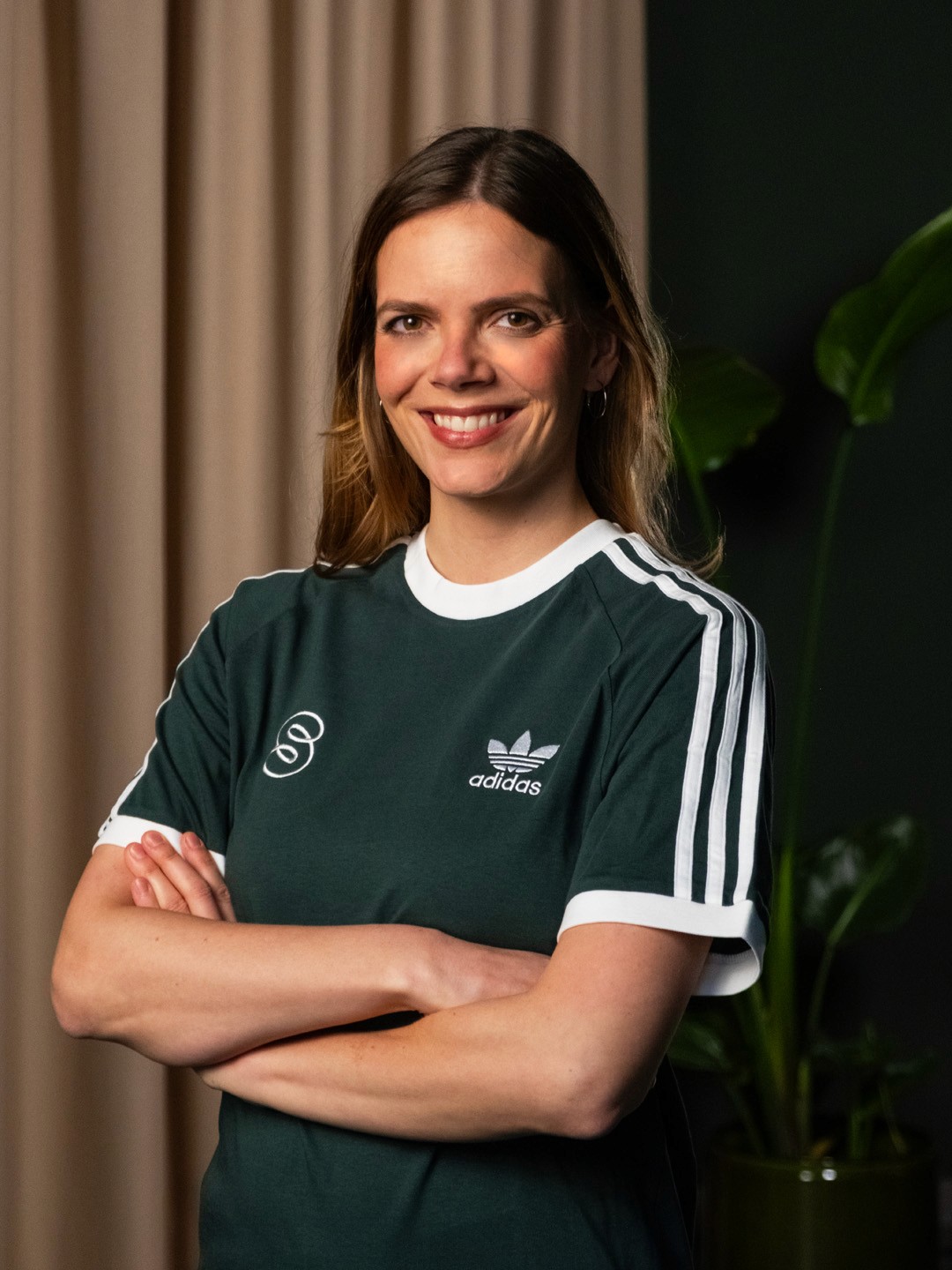
Nikola Troch is a physiotherapist and has led Somana’s physiotherapy team at Gendarmenmarkt in Berlin since March 2026. She is responsible for clinical standards and the development of the therapists.
She trained as a state-qualified physiotherapist at Timmermeisterschule Münster, completed three semesters of study alongside her training at Emden/Leer University of Applied Sciences, focusing on the ICF and the biopsychosocial model, and holds a bachelor’s degree in Applied Therapy Sciences from Hochschule Fresenius. Her further qualifications include manual therapy under the Berlin approach, a sector-specific Heilpraktiker qualification in physiotherapy, and CMD.
More interviews to come
Ortho & Physio in Dialogue is Somana’s interview series. Doctors and therapists discuss the gap between aspirations and everyday reality in the care of muscles, bones and joints.