berlin-mitte • gendarmenmarkt
5.0

Craniomandibular Dysfunction (CMD) in Berlin-Mitte at Gendarmenmarkt

Craniomandibular Dysfunction (CMD) in Berlin-Mitte at Gendarmenmarkt

CMD Therapy is a specialised physiotherapy treatment for functional disorders of the masticatory system — that is, complaints arising from the jaw joint, the chewing muscles, and the surrounding structures.

At our practice in Berlin Mitte at Gendarmenmarkt, we treat CMD on the basis of current evidence, individually tailored to your symptoms — and, where appropriate, in close coordination with your dentist, orthodontist, or other treating clinicians.

CMD Therapy is a specialised physiotherapy treatment for functional disorders of the masticatory system — that is, complaints arising from the jaw joint, the chewing muscles, and the surrounding structures.

At our practice in Berlin Mitte at Gendarmenmarkt, we treat CMD on the basis of current evidence, individually tailored to your symptoms — and, where appropriate, in close coordination with your dentist, orthodontist, or other treating clinicians.

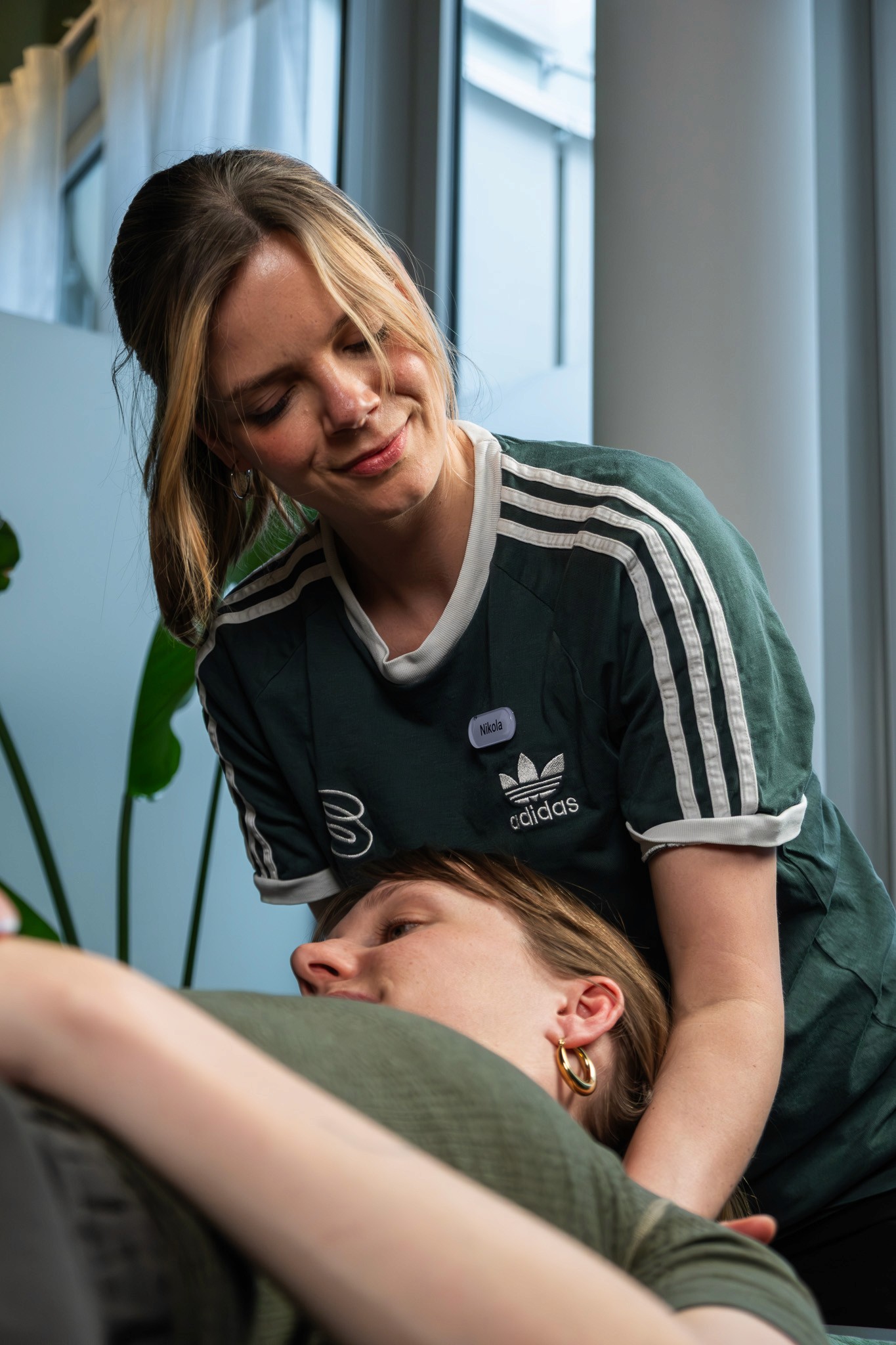
A physiotherapist uses hands-on methods with a patient during a manual therapy session

Easy to reach, bookable immediately

Französische Straße 24

10117 Berlin-Mitte

Phone

+49 30 754 394 470

Email

termine@somana.com

Opening hours

Mon–Thu: 8-8 pm, Fri: 8–5pm

A physiotherapist uses hands-on methods with a patient during a manual therapy session
  • 40 years of physiotherapy expertise

  • Evidence-based physiotherapy guidelines.

  • All insurance plans + self-pay

  • 40 years of physiotherapy expertise

  • Evidence-based physiotherapy guidelines.

  • All insurance plans + self-pay

Person with closed eyes
Green leaf
Green leaf
Older women smiling

About CMD

What is Craniomandibular Dysfunction?

Craniomandibular Dysfunction — „CMD“ for short — describes a functional disorder in the interplay of the jaw joint, the chewing muscles, the teeth, and the adjacent structures such as the cervical spine and the shoulder and neck muscles. It often arises from a combination of factors: tooth grinding or clenching (bruxism), stress, postural habits, unfavourable bite relations, dental treatments, accidents, or sustained overload.

CMD Therapy is performed by physiotherapists with certified additional training. On the prescription, the treatment usually appears as „Manuelle Therapie“ (MT, Manual Therapy) or „Krankengymnastik“ (KG, general physiotherapy) with the corresponding diagnostic note.

Treatment goals

Goals of CMD Therapy

At Somana in Berlin Mitte, we pursue clear, measurable goals with every CMD treatment:

Pain reduction

Relieving jaw, facial, head, and neck pain associated with the functional disorder.

Improving jaw function

A larger and pain-free mouth opening, less clicking or grinding in the jaw joint, smoother movement.

Reducing muscular tension

Releasing tension in the chewing, neck, shoulder, and facial muscles through manual techniques and active exercises.

Improving posture

The cervical spine and the jaw are functionally closely connected — we therefore work on posture, mobility, and stability.

Education and self-management

You learn how to recognise triggers such as bruxism, stress, or postural habits, and how to counteract them actively in everyday life — with exercises, relaxation techniques, and conscious movement patterns.
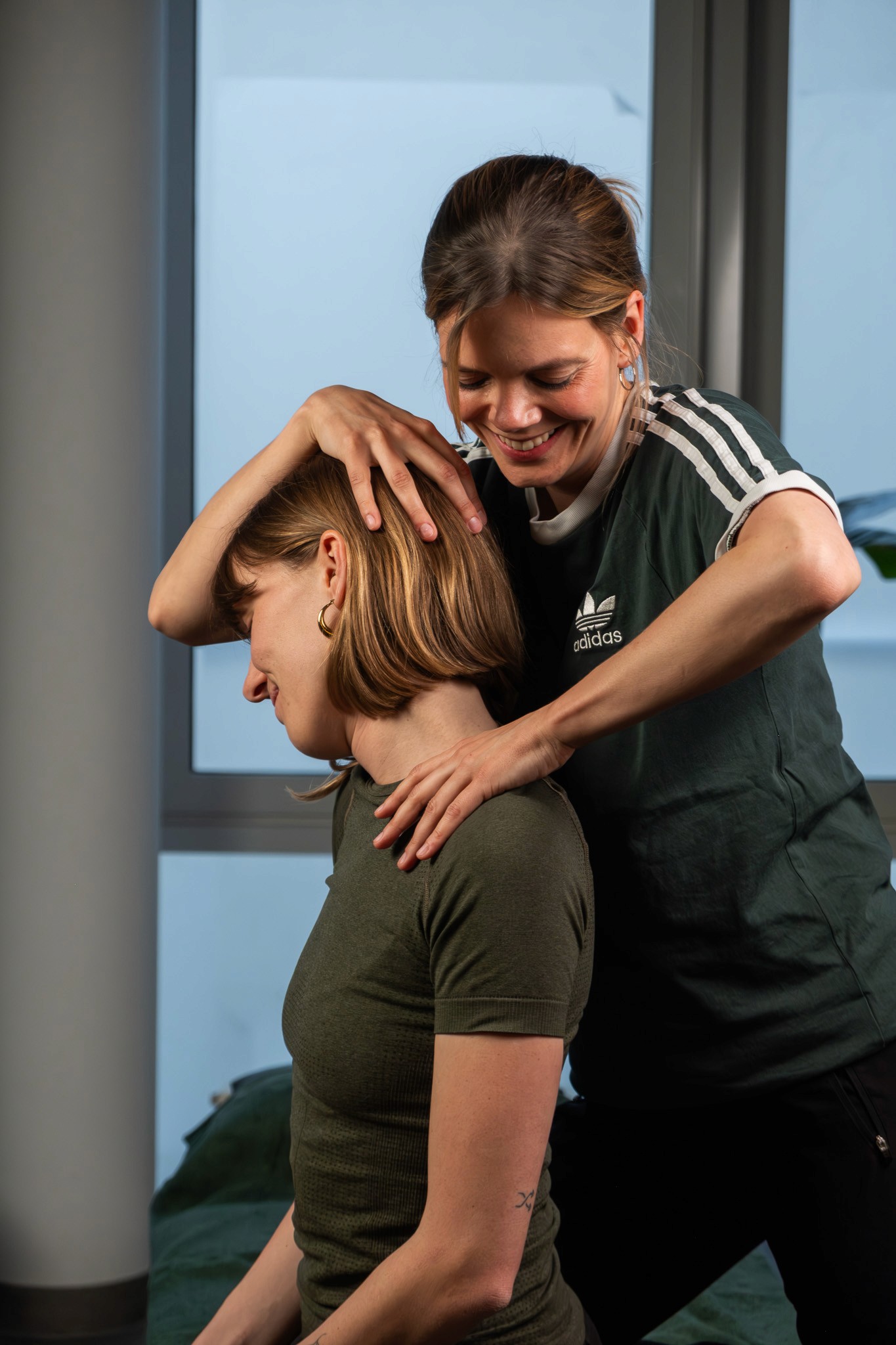
A physiotherapist bends a patients leg during a manual therapy session

Fit

Who is CMD Therapy Suitable For?

CMD Therapy is suitable for people of all ages with functional disorders of the masticatory system. At our practice in Berlin Mitte, we particularly often encounter the following complaints:

Jaw joint pain

when chewing, yawning, speaking, or at rest

Clicking, grinding, or locking of the jaw joint

with or without pain

Restricted mouth opening

for example less than three fingers wide between the front teeth

Bruxism

tooth grinding or clenching, often at night; frequently in combination with splint therapy

Tension headaches and migraine

particularly when associated with jaw or neck complaints

Neck and shoulder tension

e.g. atypical facial pain, complaints after dental procedures or orthodontic treatment

Every treatment is individually tailored to you – based on your symptoms, movement habits, and personal goals.

Steps

Course of a CMD session at Somana, Gendarmenmarkt

1

Initial Consultation and Assessment

Based on the assessment, we create a treatment plan with clear, functional goals. You will know from the start what we are working toward — for example: pain-free chewing, a larger mouth opening, more restful sleep without grinding, or fewer tension headaches. Where appropriate, we coordinate with your dentist, orthodontist, or GP.

Based on the assessment, we create a treatment plan with clear, functional goals. You will know from the start what we are working toward — for example: pain-free chewing, a larger mouth opening, more restful sleep without grinding, or fewer tension headaches. Where appropriate, we coordinate with your dentist, orthodontist, or GP.

2

Individual Treatment Plan

Based on the assessment, we create a treatment plan with clear goals. You will know from the start what we are working toward.

Based on the assessment, we create a treatment plan with clear goals. You will know from the start what we are working toward.

3

Active Treatment

Therapy combines manual techniques applied to the jaw joint, the masticatory and neck muscles, and the cervical spine with active exercise training. Depending on the individual findings, this may include manual mobilization of the jaw joint (both extra- and intraoral), myofascial techniques, mobilization of the cervical spine, posture and breathing training, as well as targeted strengthening and coordination exercises. This combined approach follows current clinical guidelines and has been shown to deliver significantly better long-term outcomes than purely passive treatment.

Therapy combines manual techniques applied to the jaw joint, the masticatory and neck muscles, and the cervical spine with active exercise training. Depending on the individual findings, this may include manual mobilization of the jaw joint (both extra- and intraoral), myofascial techniques, mobilization of the cervical spine, posture and breathing training, as well as targeted strengthening and coordination exercises. This combined approach follows current clinical guidelines and has been shown to deliver significantly better long-term outcomes than purely passive treatment.

4

Home Exercises and Education

You will receive clear explanations of your symptoms and an individual exercise program for home. Because the biYou will receive clear explanations of your symptoms and an individual home programme: mobilisation and relaxation exercises for the jaw and neck, postural exercises, breathing techniques, and — where useful — guidance on managing bruxism, stress, and everyday routines. This way you maintain the progress gained in therapy. The biggest progress happens between appointments.

You will receive clear explanations of your symptoms and an individual exercise program for home. Because the biYou will receive clear explanations of your symptoms and an individual home programme: mobilisation and relaxation exercises for the jaw and neck, postural exercises, breathing techniques, and — where useful — guidance on managing bruxism, stress, and everyday routines. This way you maintain the progress gained in therapy. The biggest progress happens between appointments.

session details

Duration and Frequency

The rules regarding treatment duration and frequency differ depending on the type of insurance. Please feel free to contact us if anything is unclear.

Statutory Insurance

Private Insurance

Duration

20 min (15 minutes is the standard set by the German remedies catalog). At Somana, we extend your first appointment free of charge to 30 minutes to ensure a thorough assessment. Many of our patients also extend their follow-up treatments to 30 minutes at their own cost.

Sessions

Usually 6 sessions per prescription

Frequency

1–2 times per week

Validity

Must begin within 28 calendar days of issue date

Long-term

Available for chronic conditions on doctor's prescription

Choose to live healthy and in control again.

Our physiotherapists

Offering CMD Therapy at Gendarmenmarkt
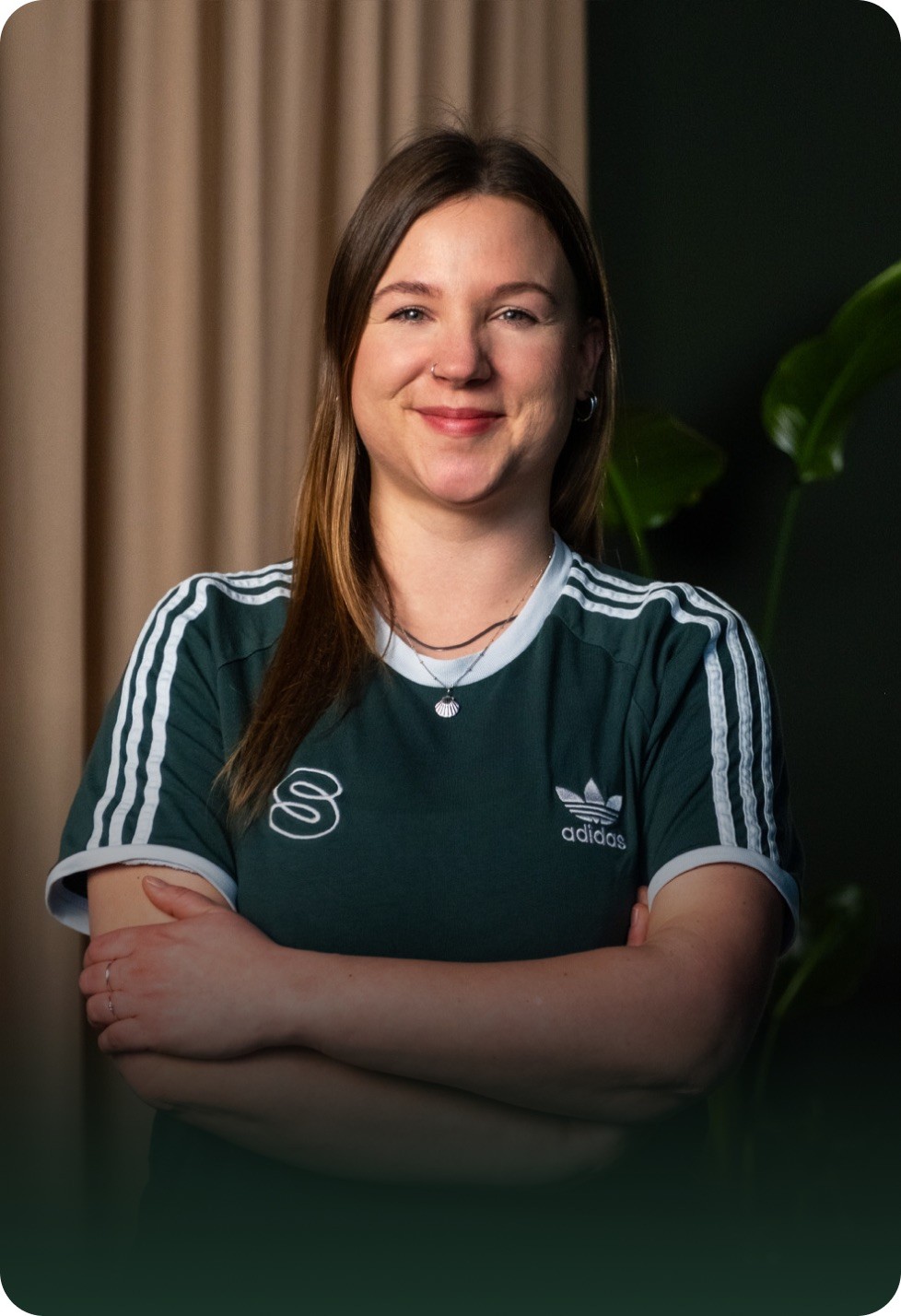
Physiotherapist

8 Years of Experience

Nele

Nele is a strength athlete and rower – and a fan of structured work. With a bachelor's degree and eight years of experience, she combines expertise in Ehlers-Danlos syndrome, the shoulder, knee, and TMJ following the N.A.P. concept with an evidence-based approach – particularly well-suited for complex cases.

Physiotherapist

10 Years of Experience

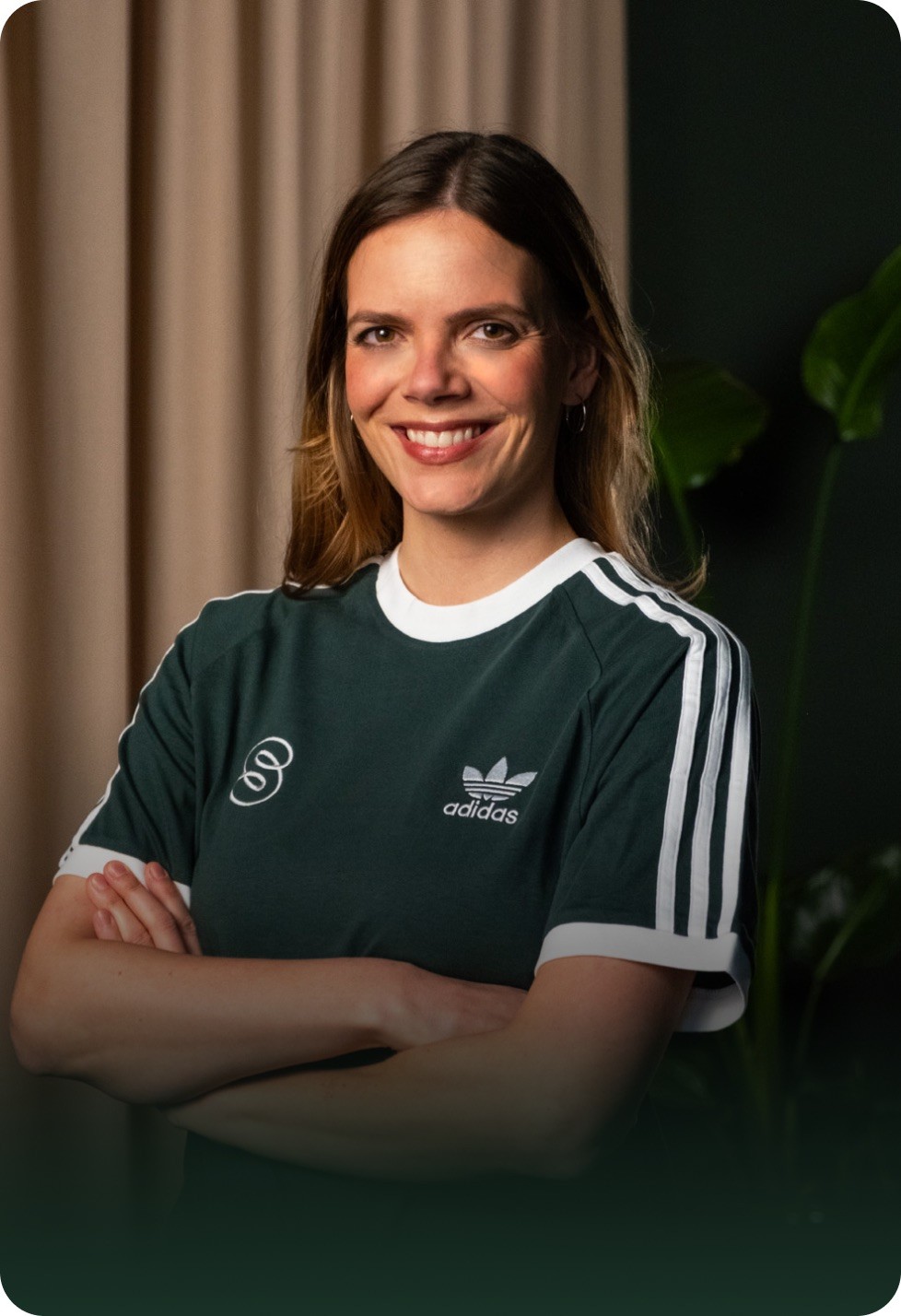
Nikola

Pilates and jogging are part of Nikola's personal life – professionally she brings ten years of experience and her bachelor's degree. Her areas of focus are TMJ, breathing, and the pelvic floor. Her approach is holistic, empathetic, and always mindful of the bigger picture.

Physiotherapist

10 Years of Experience

Lukas

Lukas is a passionate footvolley player with ten years of professional experience. His focus is on the hip, knee, and ankle, and his approach is hands-on – with particular attention to mobility and coordination.

Health Insurances & Self Pay

Costs & Co-Payments

Statutory Insurance

CMD Therapy is covered by statutory health insurance. With a medical prescription (Heilmittelverordnung) — usually bearing the entry „MT“ or „KG“ together with the CMD diagnostic note — your health insurance covers the treatment costs. You only pay:

€10 prescription fee

one-time per prescription

10% of treatment costs

as the statutory co-payment

Important: The co-payment is waived with a co-payment exemption (can be applied for through your health insurance if you exceed the income threshold of 2% of gross income – 1% for chronically ill patients).

Important: The co-payment is waived with a co-payment exemption (can be applied for through your health insurance if you exceed the income threshold of 2% of gross income – 1% for chronically ill patients).

Private Insurance and Government Aid

Private health insurance and civil servant benefit schemes (Beihilfe) reimburse fully or partially depending on your contract and status. We’re happy to provide you with an individual fee overview in advance, so you can coordinate with your insurance provider. We bill according to the current fee schedule. A prescription is also required here.

Self-Pay

You can book appointments as a self-pay patient without a prescription. Feel free to contact us – we’ll provide transparent advice on the costs.

Welcome

How to find us

Französische Straße 24, 10117 Berlin

Monday - Thursday: 8:00 - 20:00 / Friday: 8:00 - 17:00

termine@somana.com

+49 30 754 394 470

Public transport

Our practice is located in central Berlin Mitte, just steps from Gendarmenmarkt. You can reach us in 5 minutes on foot from U-Bahn Station Unter den Linden (U6+U5), 7 minutes from Hausvogteiplatz (U2) and 10 minutes from Friedrichstraße (S+U).

By bike or car

Bike racks are right by the entrance, and parking garages on Mohrenstraße, Markgrafenstraße and Bebelplatz are within walking distance. At peak times, we recommend public transport.

When you arrive

Our practice is fully accessible. There is an elevator in the building – but it's rather slow, so taking the stairs is usually the faster option. If you need any assistance, just let us know in advance and we'll meet you at the entrance.

FAQ

Everything you need to know before getting started

What is the difference between CMD Therapy and physiotherapy?

Who makes the CMD diagnosis and who issues the prescription?

How much does CMD Therapy cost with a prescription?

How long does a CMD Therapy session last?

How quickly will I see progress?

Is CMD Therapy painful?

What are intra-oral techniques and are they necessary?